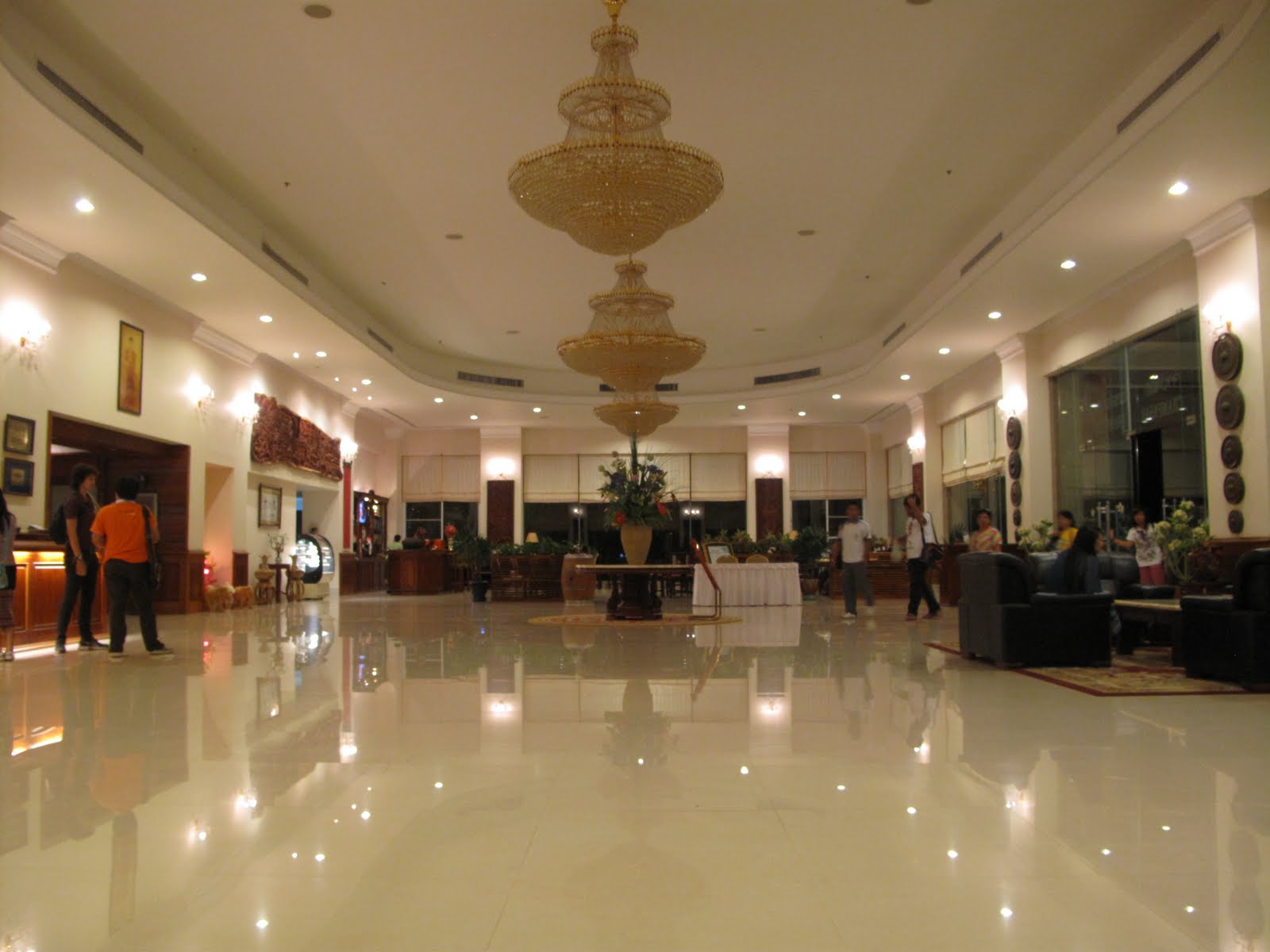
Chang Mai is Thailand's second largest city and the former capital of the Tai-Yuan kingdom of Lanna (as opposed to the southern Tai-Syam kingdoms of Sukhothai and later Ayuthaya). Lanna means Kingdom of a Million Rice Fields, and although Chang Mai is a large city, it feels green and manageable, surrounded by farmland, much of which is quickly being transformed into suburbs and shopping malls. The old part of the city is loaded with over 300 temples in an area 6 miles square. Buildings are not allowed to be built higher than the tallest temples and stupas. It still has a bustle, but is a pleasant and highly walkable town.


Lanna architecture is exquisite. There are some similarities with Lao temple design, but the flourishes and details, as well as the quality of craftsmanship, reaches elaborate new heights. Many temples are restored, but few were completely destroyed like they were in Laos. Lanna fell into alliances and wars with its neighbors (see this map of the area in the 13th century for reference) and influences from Sukhothai, the Shan states, Burmese Ava, and beyond can be seen.

Here, a temple built entirely out of teak. Despite quite a bit of logging over the centuries, the woods of Chang Mai province are in some of the best shape of all of Thailand, and beyond the rice paddies are beautiful forests and mountains. More on that in a moment.

Another typical home converted into a museum. In this case, the Center for Lanna Architecture. This home from the 19th century shows traditional Lanna details in teak on the upper floors with a more European flair on the lower floors. The people of Thailand, in the face of colonialism, quickly adapted new technologies, fashions and political mechanisms which ended up keeping Thailand from becoming a British or French protectorate.


Chang Mai has a bit of an earthy, hippy-ster vibe. There is lots of organic produce, loose raw cotton clothing, and "namaste" style bad art. There is an earlier tradition in the area for craftsmanship, carving, and furniture making, however. This interesting antiques and art shop, Srivalee, on Ratchapakinai road, was fantastic and I found all kinds of great textiles and wood carved antiques.
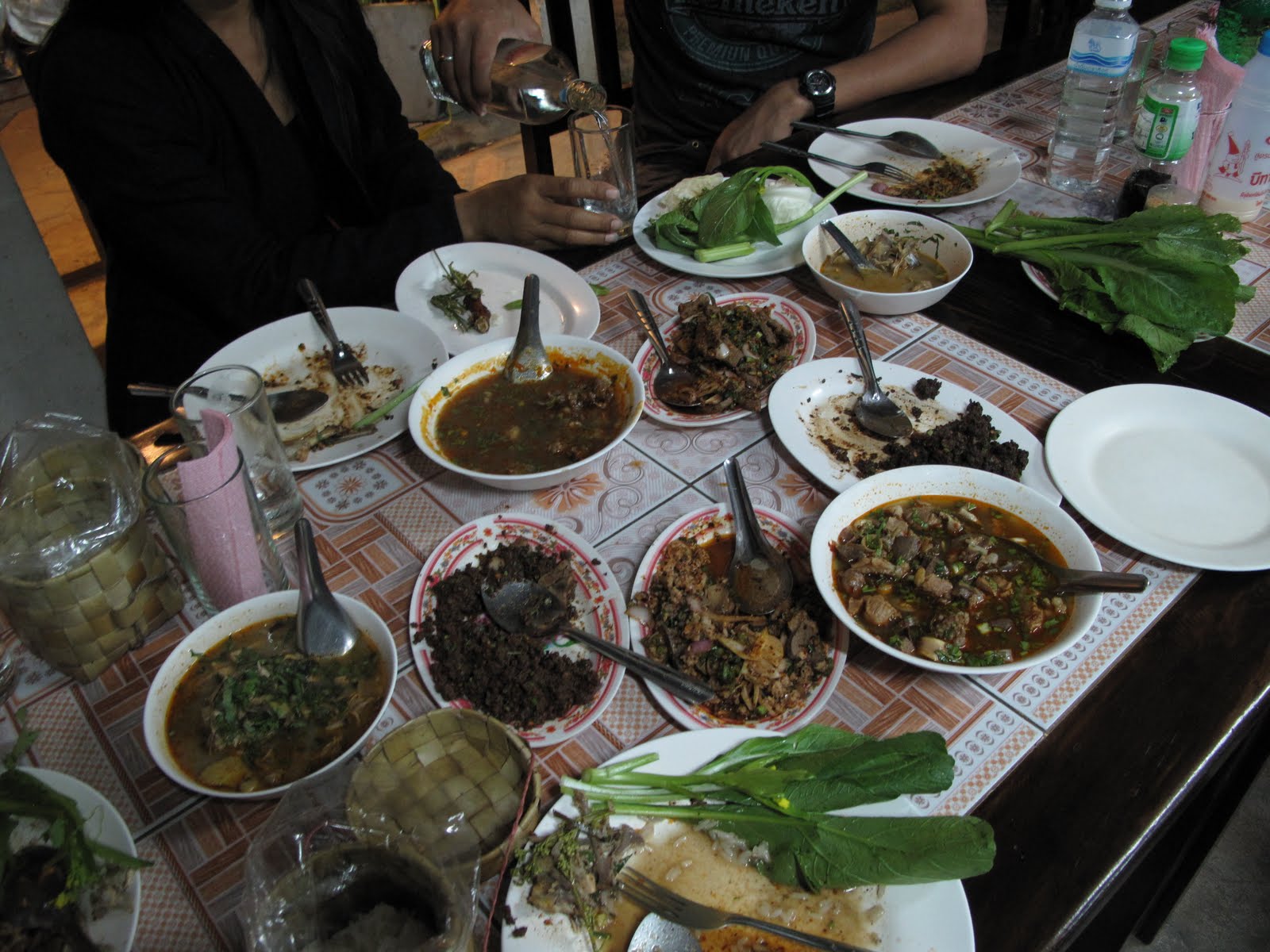
The number one draw to Chang Mai, however, has got to be the food. For the most part, it surpassed anything else we had during the earlier part of the trip (with the possible exception of a few meals in Vietnam). Not that it is a competition... we have had great food everywhere... just that in Chang Mai it was so varied and so new and so consistently great. Above, our guide Thong took us to his family's restaurant, Laab Lung Pan, on the outskirts of town. They specialize in Laab, or minced meats in a variety of spicy sauces.

Thong cooked for us himself. So much food!

Tom yum kai with chicken and banana flower.

Laab! Chicken, pork, gang aum nuam (buffalo), isan (NE Thai with pork & beef), and the local specialty, gang um mu (pork with 16 different spices). Chang Mai was on the southern spur of the Silk Road for much of its history, and the flavors here reflect an ability to get all kinds of ingredients from the sea to the mountains, and China to India to Indonesia. Incredible.

And for dessert, freshly fried bamboo worms. Our new favorite snack.

We also had delicious mango with sweet sticky rice.

Sick of all the northern Thai delicacies (just kidding) we opted for a southern Thai restaurant one afternoon. It showcased totally different flavors. Above, panang curry, gang dai pla (fish organ soup), catfish curry, green curry with buffalo, pork curry and fried pork with sugar cane.

My husband's favorite restaurant, Somtam, was visited twice at its pretty riverside location.

Khow soi ruam. The world's most delicious combination of noodles, curry, coconut, and chicken. I don't know what they do to this to make it so amazing, but we devoured ours.

Two types of papaya salad: Somtam tod, at bottom, and tam kong tod, at top. Tam kong tod is sliced green papaya with crispy river shrimp and peanuts. Somtam tod is crispy papaya with the restaurant's special sauce. They were even better when mixed together.

Tap tim, or steamed snapper from Pla Po Pak Sod restaurant, also on the outskirts of town.

Pad cha, or spicy snapper with red chili paste and vegetables.

And a southern import, pu sen, or crab with glass noodles.

We also saw an impressive amount of food at the famous Chang Mai night market.


We were full, but tried this delicious grilled banana.

The nature surrounding the city is also not to be missed. One day we drove up to Thailand's highest mountain, an 8,500 foot high peak that is part of the Himalayan mountain chain. The weather on top was actually really cool, and the plant life almost alpine like.


We hiked around, past a number of waterwalls and through flower farms deep in the woods that used to be opium plantations. The Kingdom of a Million Rice Fields really was impressive in its culture, nature, food and architecture. I am so curious to compare it to Bangkok and central Thailand, as well as the Malay-influenced south, where we are headed next. There will be a lag in posts, as I will be off the grid completely for the next week. Until then!